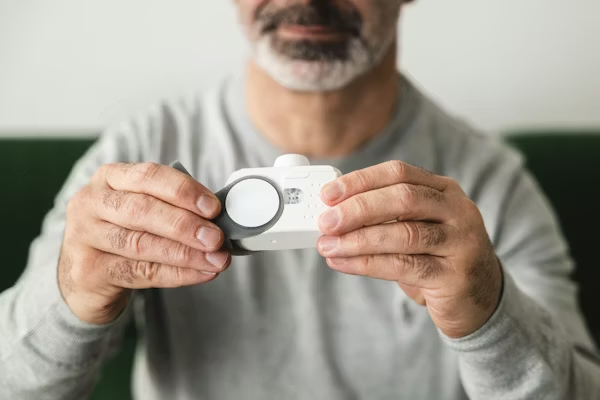

The inhaler sits in your bag, present but invisible, like a security blanket you’ve learned not to notice. You’ve had asthma since childhood, managed it well, consider yourself experienced. Then one Tuesday evening, out of nowhere, your chest tightens walking through a hotel lobby. Within minutes you’re wheezing, reaching for that rescue inhaler, confused about what changed. Later you learn the hotel had recently installed new carpeting. That volatile chemical off-gassing, completely invisible, triggered a reaction you couldn’t anticipate.
Asthma control depends heavily on trigger awareness, yet many patients operate with incomplete maps of their personal danger landscape. Understanding triggers fully, including the hidden and the obvious, separates those who merely survive with asthma from those who truly thrive.
Recognizing the Usual Suspects
Certain triggers dominate medical education and patient awareness for good reason. They affect large percentages of people with asthma and often produce dramatic, immediate symptoms.
Allergens that surround us
Dust mites rank among the most common indoor triggers worldwide. These microscopic creatures inhabit bedding, upholstered furniture, carpets, and stuffed animals, feeding on human skin flakes. Their fecal particles become airborne with disturbance, inhaled deep into airways, and provoke inflammation in sensitized individuals. Warm, humid environments accelerate their reproduction.
Pet dander triggers similarly widespread reactions. Cats produce particularly potent allergenic proteins in saliva and sebaceous glands. These proteins are lightweight and remain suspended in air for hours. Dogs, rabbits, guinea pigs, and even birds contribute their own allergenic profiles. Paradoxically, so-called hypoallergenic breeds often disappoint, as allergen production varies more by individual animal than by breed marketing claims.
Pollen seasons create predictable annual challenges for outdoor-sensitive patients. Tree pollens dominate spring, grasses peak in early summer, and ragweed rules late summer and fall. Climate change has extended pollen seasons and increased pollen concentrations in many regions, worsening symptoms for previously stable patients.
Mold spores thrive in damp environments: basements, bathrooms, kitchens, and anywhere water damage occurred. Outdoor mold peaks in warm, humid weather and after leaf fall. Unlike pollen, mold avoidance requires attention to indoor humidity control and prompt repair of water intrusion.
Irritants rather than allergens
Tobacco smoke remains the most dangerous common exposure, damaging airways directly and enhancing allergic responses. Secondhand exposure, thirdhand residue on surfaces, and even smoke transported on clothing all harm asthma control. No safe exposure level exists.
Air pollution, both outdoor and indoor, triggers symptoms and accelerates long-term lung function decline. Particulate matter from combustion, ozone in summer air, and nitrogen dioxide from gas appliances all contribute. Wildfire smoke has emerged as a major concern in affected regions, with health impacts extending hundreds of miles from active burns.
Strong odors and fumes, including cleaning products, perfumes, paints, and solvents, irritate sensitive airways even without true allergic sensitization. The hotel carpet scenario illustrates this mechanism: volatile organic compounds causing direct irritation rather than immune-mediated response.
Uncovering Hidden and Delayed Triggers
Beyond obvious exposures, asthma maintenance requires detective work identifying subtle or delayed triggers that patients often miss entirely.
Infections and their aftermath
Viral respiratory infections, particularly rhinovirus, represent the most common trigger for acute exacerbations in both children and adults. The common cold provokes wheezing that outlasts other symptoms by weeks. Influenza poses greater danger, justifying annual vaccination as essential asthma management rather than optional prevention.
Less recognized, bacterial sinusitis frequently worsens lower airway inflammation through mechanisms involving postnasal drainage and shared inflammatory pathways. Treating chronic sinus issues sometimes produces unexpected asthma improvement.
Gastroesophageal reflux disease (GERD) triggers cough and wheezing, particularly at night, through acid microaspiration and vagal reflex pathways. Many patients experience silent reflux without heartburn awareness. Evening meal timing, head-of-bed elevation, and appropriate acid suppression can reveal this hidden contributor.
Medications that betray
Beta-blockers, used for hypertension, heart disease, and glaucoma, block the bronchodilator effects of adrenaline and can precipitate severe asthma attacks. Even topical ophthalmic beta-blockers for glaucoma absorb systemically enough to cause problems. Non-selective agents pose greatest risk; cardioselective options may be tolerated but require caution.
Aspirin and nonsteroidal anti-inflammatory drugs (NSAIDs) trigger acute bronchospasm in approximately five to ten percent of asthma patients, often those with nasal polyps and chronic sinusitis. This aspirin-exacerbated respiratory disease requires strict avoidance and alternative pain management strategies.
Some preservative-containing medications, including certain nebulized solutions and intravenous preparations, trigger reactions through sulfite or benzalkonium chloride content. Switching to preservative-free alternatives resolves these iatrogenic triggers.
Physical and emotional factors
Exercise-induced bronchoconstriction affects up to ninety percent of asthma patients, though many never recognize it because symptoms peak five to fifteen minutes after activity ceases. Proper warm-up routines, pre-exercise medication, and sport selection allow full athletic participation despite this tendency.
Emotional stress triggers symptoms through multiple pathways: hyperventilation, airway inflammation, and medication nonadherence during difficult periods. Stress management belongs in comprehensive asthma care, not as dismissal of physical disease but as recognition of mind-body connections.
Weather changes, particularly cold dry air and thunderstorm fronts, provoke symptoms through airway cooling and osmotic effects. Thunderstorm asthma events, where pollen granules rupture and release concentrated allergen loads, have caused epidemic emergency department visits.
Building Your Personal Trigger Profile
Effective asthma management requires individualized trigger identification rather than generic avoidance lists.
Systematic tracking methods
Symptom diaries connecting exposures to outcomes reveal patterns invisible to memory alone. Note locations, activities, foods, medications, emotional states, weather conditions, and symptom scores. Digital apps facilitate this tracking, though paper journals work equally well.
Peak flow monitoring provides objective data when subjective symptom perception proves unreliable. Some patients lose sensitivity to gradual decline, a phenomenon called “pulmonary function illusion.” Regular measurement establishes personal best and identifies early deterioration before crisis.
Allergy testing, both skin prick and serum specific IgE, identifies sensitizations that may or may not correlate with clinical triggers. Positive tests indicate immune recognition; symptom correlation confirms clinical relevance. Component-resolved diagnostics now distinguish primary sensitizers from cross-reactive proteins, refining avoidance recommendations.
Environmental modification priorities
Focus energy on triggers you can actually control. Bedroom environmental control offers highest impact for dust mite-sensitive patients: allergen-impermeable encasings, weekly hot water washing, humidity reduction, and removal of carpet and heavy drapes. For pet-allergic patients, creating pet-free zones, particularly bedrooms, and HEPA filtration provide compromise solutions when pet removal is emotionally impossible.
Workplace exposures require occupational health evaluation when asthma worsens after starting new jobs. Isocyanates in spray foam, flour dust in baking, wood dust in carpentry, and numerous chemicals in healthcare and cleaning professions cause occupational asthma that may become permanent if exposure continues.
FAQs
Can trigger avoidance replace medication?
Rarely. Most patients require daily anti-inflammatory medication regardless of environmental perfection. However, excellent trigger control often allows medication reduction and prevents the exacerbations that cause long-term lung damage. Think of triggers and medications as partners, not alternatives.
Why do my triggers seem to change over time?
Airway inflammation creates nonspecific hyperresponsiveness. When well-controlled, you may tolerate exposures that trigger symptoms during flare-ups. Additionally, new sensitizations develop, and hormonal changes, particularly around puberty, pregnancy, and menopause, modify immune responses. Regular reassessment keeps your management current.
Is it worth moving to a different climate?
Usually not. Patients often develop new sensitivities to local allergens within one to two years of relocation, while losing the social support and medical relationships that stabilized their care. Targeted trips during severe pollen seasons sometimes help, but permanent relocation rarely provides lasting benefit and disrupts employment and family systems.
How do I handle triggers I cannot avoid?
Pre-treatment with bronchodilators before unavoidable exposures, increased controller medication during high-risk periods, and wearing masks that filter particles or volatile compounds all reduce impact. Discuss specific situations with your healthcare provider to develop tailored strategies rather than accepting inevitable symptoms.
Can I develop new triggers suddenly?
Yes, particularly after severe respiratory infections or significant allergen exposures that shift immune patterns. New occupational exposures, new pets, new homes with hidden mold, or new medications can all introduce triggers previously absent from your life. Ongoing vigilance matters even for long-stable patients.