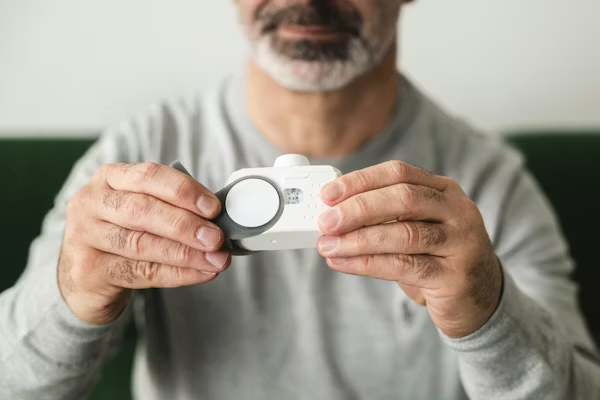

The tightness started as a whisper you almost ignored, a slight resistance when inhaling deeply. Within minutes it escalated to something undeniable: the sensation of breathing through a narrowing straw, each exhale producing a high-pitched whistle audible across the room. Your chest feels simultaneously full and empty, as if air reaches your lungs but cannot properly exchange. Panic rises, which worsens everything. You need your inhaler, but where is it? The bedroom, maybe, or the car. The thought of moving that far feels impossible.
Asthma attacks represent acute failures of control, moments when chronic management collapses into urgent crisis. Understanding their warning signs, progression stages, and appropriate emergency response saves lives and prevents the long-term lung damage that repeated severe attacks inflict.
Recognizing Attack Onset and Progression
Asthma attacks rarely arrive without warning, though early signals are easy to dismiss until escalation forces attention.
Early warning indicators
Subtle symptoms precede obvious distress by hours or even days in many patients. Increased cough frequency, particularly at night, often signals deteriorating control. Decreased exercise tolerance, where previously manageable activities now provoke symptoms, suggests inflammation building. Peak flow meter readings trending downward, even within “normal” ranges, predict impending instability if the pattern continues.
Some patients experience identifiable prodromes: itchy chin, throat tightness, or unusual fatigue. Learning your personal early warning pattern allows intervention before severe attack develops. Unfortunately, many patients, particularly those with recent diagnosis or infrequent symptoms, lack this self-knowledge.
The classic attack presentation
As attack intensifies, symptoms become unmistakable. Dyspnea, the subjective sense of difficult breathing, dominates experience. Patients typically describe chest tightness, inability to get enough air, or breathing that requires conscious effort. Wheezing, the musical high-pitched sound on expiration, occurs as airways narrow and vibrate. However, severe attacks may produce minimal wheezing if airflow is too reduced to generate sound, a dangerous silence.
Cough often accompanies attack, sometimes dry and hacking, sometimes productive of thick mucus. Accessory muscle use becomes visible: neck muscles strain, shoulders rise, intercostal spaces retract with effort. Speaking requires pauses for breath; complete sentences become impossible. Anxiety and panic are natural responses that unfortunately worsen physiological parameters through hyperventilation and sympathetic activation.
Objective measures of severity
Respiratory rate increases, though severe attacks may paradoxically slow as exhaustion develops. Heart rate accelerates. Pulse oximetry reveals oxygen saturation; values below ninety percent indicate serious hypoxemia. Peak expiratory flow, measured if the patient can cooperate, quantifies severity: below fifty percent of personal best signals severe attack, below twenty-five percent signals life-threatening crisis.
Silent chest, where auscultation reveals minimal air movement despite visible distress, indicates critical narrowing requiring immediate emergency intervention. Altered mental status, cyanosis (blue lips or fingernails), and bradycardia late in attack are pre-arrest signs.
Immediate Response: The First Critical Minutes
What happens in the initial minutes of an attack often determines whether emergency department visits or hospitalization become necessary.
Rescue inhaler protocol
Albuterol or levalbuterol, short-acting beta-agonists, remain first-line rescue medication. The standard adult dose is two to four puffs from a metered-dose inhaler, ideally delivered through a spacer device that improves lung deposition. Spacers are particularly crucial for children and for anyone during severe attack, when coordination suffers.
Severe attacks may require repeated dosing: two puffs every twenty minutes for up to one hour, totaling three treatments. If minimal improvement occurs after this sequence, emergency medical evaluation is mandatory. Do not delay seeking help hoping for gradual resolution.
Proper inhaler technique matters enormously during distress. Shake the canister. Exhale fully. Seal lips around the mouthpiece or mask. Actuate the inhaler at the start of a slow, deep inhalation. Hold breath for ten seconds if possible. Wait one minute between puffs. During attack, patients often rush this process, receiving medication on the tongue and throat rather than in the lungs.
Positioning and environment
Upright positioning, sitting or standing, maximizes lung expansion capacity. Lying flat worsens dyspnea and should be avoided unless exhaustion demands it. Loosen tight clothing around the neck and chest.
Remove yourself from trigger exposure if identifiable: smoke, allergens, cold air, strong odors. Move to temperature-controlled, filtered air if possible. However, do not delay medication administration to seek ideal environment.
Stay calm, a recommendation that feels insulting when breathing is compromised but remains physiologically sound. Panic hyperventilation worsens air trapping and respiratory muscle fatigue. Slow, controlled breathing, if achievable, helps. Some patients benefit from pursed-lip breathing: inhale through nose for two counts, exhale through pursed lips for four counts.
When to call emergency services
Certain signs mandate immediate professional intervention regardless of rescue inhaler use. These include: severe breathlessness at rest, inability to speak more than short phrases, peak flow below fifty percent of best, no improvement after initial bronchodilator treatment, drowsiness or confusion, cyanosis, or exhaustion suggesting impending respiratory failure.
Never drive yourself to emergency care during significant attack. Call emergency services. Paramedics can administer oxygen, nebulized medications, and initiate advanced treatment en route. The stress of self-transport worsens outcomes and endangers others if consciousness deteriorates.
Medical Emergency Management and Follow-Up
Hospital-based care for severe attacks involves escalation beyond what home or outpatient settings provide.
Emergency department interventions
Oxygen supplementation targets saturation above ninety percent. Continuous nebulized beta-agonists deliver higher medication doses than inhalers can provide. Ipratropium bromide, an anticholinergic bronchodilator, adds benefit in severe attacks. Systemic corticosteroids, oral or intravenous, reduce inflammation but require hours to take effect; early administration shortens hospitalization.
Magnesium sulfate, administered intravenously, produces bronchodilation in severe cases. Epinephrine, subcutaneous or intramuscular, serves as rescue therapy when other agents fail. Non-invasive ventilation or mechanical intubation becomes necessary for respiratory failure or altered consciousness.
Post-attack care and prevention review
Recovery from severe attack requires days to weeks for full baseline restoration. Corticosteroid courses, typically five to seven days, prevent early relapse. Review of trigger exposure, medication adherence, and inhaler technique identifies modifiable factors. Adjustment of controller medications, often stepping up intensity temporarily, prevents recurrence.
Every severe attack should prompt comprehensive reassessment of the asthma action plan. Was it followed? Did it work? Are thresholds for emergency contact appropriate? Update written plans with current medications, provider contacts, and personalized instructions based on this experience.
Conclusion
Asthma attacks transform manageable chronic disease into frightening, potentially fatal emergencies. Recognition of early warning signs, prompt and correct rescue inhaler use, and appropriate threshold for emergency activation determine outcomes.
If you have asthma, maintain rescue medication accessibility always, not just during symptomatic periods. Share your action plan with household members, coworkers, and close contacts who might need to assist. Practice inhaler technique when well, so muscle memory exists when cognition is compromised by hypoxia.
The goal is not eliminating all attacks, which is unrealistic for many patients, but preventing progression to severe, life-threatening episodes. With proper preparation, most attacks remain controllable at home, and those requiring emergency care resolve without lasting harm. Respect your asthma enough to prepare for its worst moments, and you preserve the freedom to live fully during its quiet ones.